A decade after opening a two-person office in Singapore, one of Japan’s leading SME-focused M&A advisory firms Nihon M&A Center has grown into a 60-strong regional operation spanning five ASEAN countries. Mr Yusuke Ojima, Corporate Officer & Head of Overseas Business, sits down with us to reflect on the journey so far, and to share an ambitious mandate for the decade ahead.
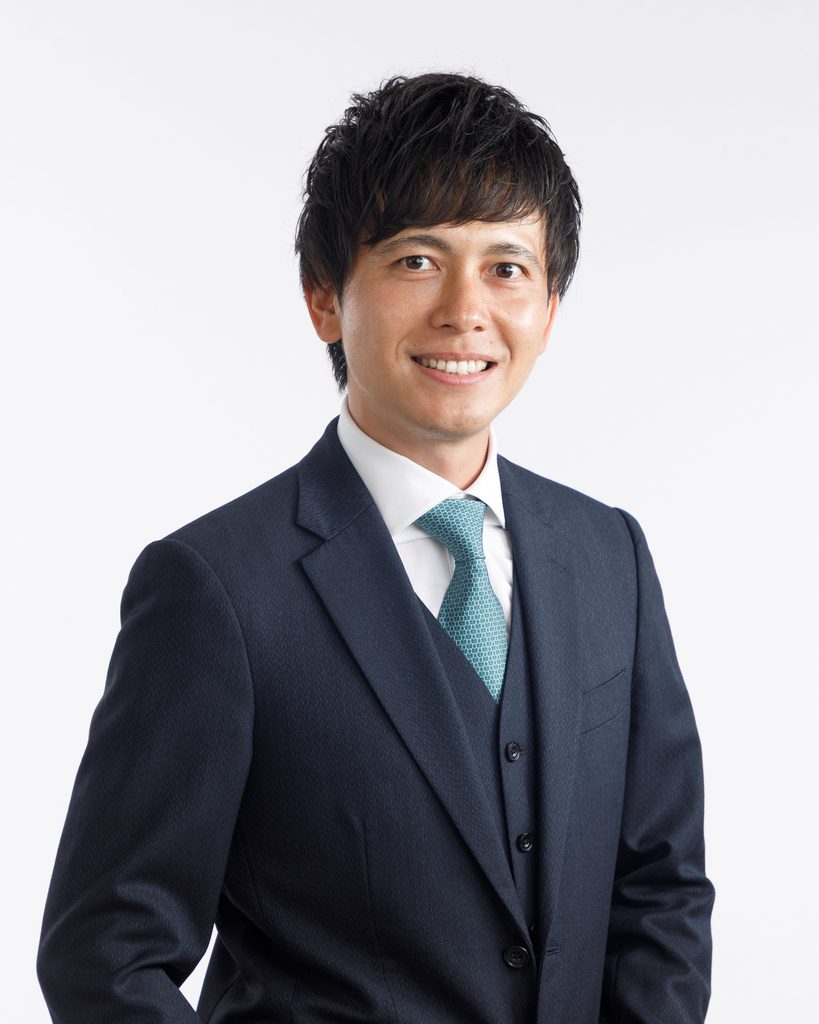
(Photo: Mr Yusuke Ojima)
Ten years ago, the firm’s overseas story began with an uncomfortable truth and an empty office. That is where Mr Ojima picks up the story.
“Japan was facing a declining population, and the domestic market was only going to get smaller,” he recalls. “For Japanese companies to stay competitive, expanding overseas would increasingly become essential, not just a nice-to-have.”
Large Japanese corporations had already reached the same conclusion and were using mergers and acquisitions (M&A) as their vehicle for global expansion. But the backbone of Japan’s economy has always been its small and medium-sized enterprises, and for them, the door to cross-border M&A remained largely closed. Advisors who understood how to guide SMEs through international deals were scarce, even as ambition among business owners was anything but.
“That gap really stood out to us,” says Mr Ojima. “We saw a meaningful role for ourselves in helping to close it.”
So the firm, the first SME-focused M&A advisory firm to be publicly listed in Japan, opened its first overseas office in Singapore with just two people. Today, that outpost has grown into a team of roughly 60 professionals across local offices in Singapore, Malaysia, Vietnam, Thailand, and Indonesia, all in service of a single vision: connecting Japanese companies with businesses across ASEAN through M&A.
More Than a Deal Count
Ask Mr Ojima what he is proudest of from the past decade, and the answer is not a transaction tally.
“Honestly, the number of deals we have closed is not really what sticks with me,” he says. “What matters most is the business owners and companies we have been able to help along the way: Japanese companies taking that big first step overseas, and ASEAN business owners working through succession or looking for their next stage of growth. Knowing we have genuinely contributed to their long-term future and sustainability, that is the part I’m proudest of.”
The road there was far from smooth. The firm’s most severe test arrived in 2020, when the COVID-19 pandemic brought international travel to a standstill. For a business built on trust forged over face-to-face meetings, walking through a counterpart’s offices, sitting down for a meal together, it was, in Mr Ojima’s words, “one of the most difficult stretches our business has ever been through.”
But adversity forced adaptation. The team learned to build trust remotely, closing deals in which buyer and seller did not meet in person until well after signing. Just as importantly, the firm used the pause to look inward, strengthening its organization and building a more scalable platform. Mr Ojima credits that groundwork for the growth that followed.
The deeper lesson of the decade, however, was about people. “Every country we work in has its own way of doing business, its own culture, its own language. What surprised us most is how similar business owners really are underneath all of those differences,” he reflects. “Whether you are in Japan or anywhere across ASEAN, most entrepreneurs see their company as their child and their employees as family. Once we understood that, we stopped talking about M&A as just a financial transaction and started talking about it for what it really is to most owners: a way to pass on a legacy and secure a company’s future.”
A Market That Grew Up Around Them
The firm’s mission has never wavered, but its clientele has evolved dramatically. In the early years, most Japanese clients were large corporations, the only players with the resources and experience for cross-border deals. Today, a growing wave of Japanese SMEs and regional companies is actively using M&A to expand internationally, driven partly by the shrinking domestic market and partly by a generational shift among owners who see ASEAN not as a distant frontier, but as a natural next step.
On the ASEAN side, the firm works primarily with owner-managed businesses. Some are navigating succession, while others are seeking growth capital or a strategic partner to reach the next level.
What sets the firm apart in a crowded advisory landscape? Mr Ojima points first to heritage: decades of experience, a proprietary database, and pattern recognition in SME M&A that is genuinely difficult to replicate. Then there is the on-the-ground presence, with local offices staffed by advisors who know their markets intimately, “rather than having people flying in for a week and flying back out.”
But above all, it is the network. In Japan, the firm draws on more than 600 professional consultants, partnerships with megabanks including SMBC and MUFG, relationships with 97 of the country’s 99 regional banks, and over 1,000 accounting firms nationwide. In ASEAN, it has cultivated ties with leading financial institutions, professional firms, and industry players across each market.
“A lot of ASEAN SME companies are actively looking to partner with Japanese businesses, but there are still very few firms that can actually connect them with the right ones,” Mr Ojima explains. “Being able to bring high-quality Japanese buyers into the region, backed by trusted partners on both sides, creates significant value for everyone involved.”
Success Begins After Signing
Pressed on what makes a cross-border deal succeed, Mr Ojima offers a view that cuts against the industry’s transactional instincts: closing is not the goal.
“What truly defines the success of an M&A is whether the integration afterward actually works,” he says. Cultural differences, business practices, and management styles do not disappear at signing. If anything, they surface more clearly afterward. That is why the firm supports clients well beyond the deal itself, helping both sides understand each other, anticipate friction points, and lay the foundation for genuine partnership.
“For us, success is not measured by the number of transactions completed. It is measured by how many businesses truly thrive after the transaction.”
The Mandate: From Asia to the World
With a solid regional foundation in place, Mr Ojima’s mandate as the Head of Overseas Business is unambiguous: accelerate.
Japan’s M&A market has already matured significantly, driven largely by business succession needs. ASEAN, by contrast, is still at an early stage, and that gap is precisely where he sees the opportunity. The firm’s priority for the next decade is to develop the M&A market across ASEAN and cement its position as the region’s market leader, investing further in people, capabilities, and regional presence.
He sees two engines powering that growth. The first is business succession: Singapore is already grappling with an aging population, and Malaysia and other ASEAN economies are expected to follow a similar demographic path, making succession-driven M&A one of the most significant structural shifts the region’s SME landscape will experience. The second is growth-oriented M&A, as ASEAN’s vibrant startup ecosystem increasingly views acquisition, not just an IPO, as a credible and strategic path to scale, and as listed companies grow more active in restructuring, management buyouts, and private equity transactions.
Technology, including AI, will reshape how the work gets done, from faster market research to sharper company analysis and smarter target identification. But Mr Ojima is clear-eyed about its limits. “Understanding what a business owner really wants, building trust, negotiating complex deals, and helping companies succeed after the transaction closes, those still take human judgment and real experience. That is a deeply human role technology alone will never replace.” AI, he adds, is only as powerful as the data behind it, which is another reason the firm continues to invest in its proprietary database while adopting tools where they genuinely add value.
And the ambition does not stop at ASEAN’s borders. The longer-term vision is a truly global cross-border M&A platform connecting Japanese companies with businesses across the United States, Europe, and beyond, with ASEAN as the foundation for something much larger.
Asked to sum up the firm’s next chapter in a single sentence, Mr Ojima does not hesitate:
“From Japan to Asia, and from Asia to the world.”
Through strategic M&A, the firm remains committed to helping SMEs around the world grow and succeed, for the long term.
Stay ahead with exclusive insights! Sign up for our mailing list and never miss an article. Be the first to discover inspiring stories, valuable insights and expert tips – straight to your inbox!