From Mauritius to Singapore: Mr Delaporte’s Patient Bet on the City’s SMEs
An industrial engineer who grew up watching his father do private equity in Africa has spent five years in Singapore building what is now Saeera, a small group of local businesses. His approach is to buy well, change little and stay for the long haul.
On a typical week, Mr Milan Delaporte, Founder & Principal of Saeera might be sitting in on a team meeting, walking through a finance process, and next checking operations on site. None of it is glamorous, and that is exactly what he likes about it.
“What I love doing is finding the roadblocks in a company,” he says, “and coming in with whatever tools I can bring to improve how it operates.”
Five years after arriving in Singapore, Mr Delaporte runs Saeera, a lean private investment office that buys profitable small and medium-sized enterprises and keeps them. His route here took in a childhood in Mauritius, an engineering career, a family loan and a city he now calls home.

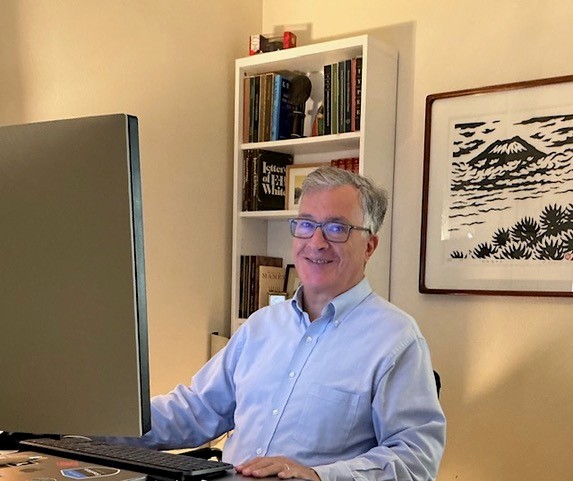
(Photo: Milan Delaporte)
A private equity education at home
Mr Delaporte grew up in Mauritius. His father has worked in private equity in Africa for about 20 years. Over that time he found deals, ran due diligence and operated the companies he bought.
That background shaped the family’s thinking. Buying a business was not only a financial transaction to them. It meant finding the right company, understanding it closely and running it well afterwards. When the family looked for a place to apply that experience, Singapore stood out.
An engineer first
Mr Delaporte did not set out to be an investor. He studied industrial engineering and expected to work in production. “That’s why I really enjoy working on processes and improvements,” he says.
His early career was hands-on. He spent two years with an NGO on construction work, then about a year in the chemical industry. The sectors he works in now are not technical, but he says engineering gave him something that lasted: curiosity.
“The good thing about an engineering background is that you can talk about very diverse subjects and still go deep into any one of them,” he explains. “Even when it gets technical, you’re never lost.” That habit of asking why a process works the way it does now drives how he approaches every company in the group.
Coming to Singapore
About five years ago, Mr Delaporte moved to Singapore to join Ideal Connection, a commercial space business that would become the first company in the group. “It was a personal decision,” he says. He wanted to be inside a real operating business, learn how it worked day to day, and build something of his own from there.
Since then his ties to the city have only grown. His sister has come from France to work alongside him, and today the two siblings run the group together. Mr Delaporte has also put down roots of his own. He lives here with his French wife and their three children, all of them growing up in Singapore.
He is clear about why he chose the city. “Singapore is a very interesting country. It’s still growing like an emerging market, even though it’s already very developed,” he says. “The laws are clear, people are well educated and it’s safe.” Its strategic position in the region adds to the appeal. “For me, Singapore is the right place to settle down and build the group.”
Learning on the job
Mr Delaporte’s first years in Singapore were spent inside Ideal Connection, on operations rather than deal-making. He learned the business from the ground up: the clients, the locations, the numbers and the people. That turned out to be a demanding training ground.
Ideal Connection manages roadshow and retail spaces in MRT stations and bus interchanges, and it depends on foot traffic. Then COVID-19 emptied those spaces. “COVID was a very difficult period,” he says, “but the business came through it, and today it’s doing well.” Keeping it running through those months taught him how quickly a good company can be tested, and how much rests on the team behind it. Ideal Connection remains the foundation of the group.
Around three years ago, Mr Delaporte enrolled in an MBA at INSEAD in Singapore. His goal was to strengthen his finance skills alongside his engineering background. He wanted to be as comfortable with a balance sheet as with a process map.
Building a small industrial group
The group has since grown to three businesses. Alongside the property management company, Saeera owns two pest control firms. One serves mainly government projects and agencies. The other specialises in wood fumigation for export shipments, an essential step for cargo leaving one of the world’s busiest ports.
The venture started with a family loan. Today it runs on Mr Delaporte’s own capital, and that changes what he can do. A private equity fund has to sell its companies within a few years to return money to investors. He does not. “Now it’s my own capital, so I can choose to stay for the long term,” he says. “As long as the fit is right, I’m happy to keep a company indefinitely.”
He has no fixed holding period. The model he finds most interesting is Berkshire Hathaway: own good companies for decades and keep adding value along the way. His ambition, in his own words, is to “continue to build a small industrial group.”
Change little, help where it counts
What sets Mr Delaporte apart is how little he changes when he arrives. “We try not to change anything in a business until we really understand it,” he says. Employees are kept on and asked for their views. Each company runs on its own, with its own managers making decisions, and there is no central headquarters adding layers of process.
His reasoning is simple. “If the company is profitable, it means there are people there doing a good job. Let them run it, because they know what they’re doing.”
That does not make him a passive owner. He and his sister hold weekly meetings with each company’s team, sit on the boards, and stay close to finance and legal matters. His favourite work is the project sprint. He joins a company for one or two months to fix something specific, whether that is boosting marketing, building new IT systems, tightening finance processes or sorting out HR. Once the team can carry it, he steps back. Where a business needs deeper expertise, he brings in a specialist instead of keeping a standing team of consultants.
The previous owners have taken different paths. In one acquisition the seller left on day one. In another, the owner stayed for a few years before stepping away. In a third, the former owner still works alongside Mr Delaporte and his sister, and it is going well. “It depends on what the founder wants,” he says, “but also on the business itself, and how difficult the transition is.”
The hard parts
Mr Delaporte is candid about what is difficult. New tools and processes always meet resistance, and he has to keep encouraging teams until they see the benefits. Recruitment is the other constant struggle, especially for operations roles in pest control. The work is physical and outdoors. Plenty of Singaporeans are happy to do it, he notes, but attracting younger workers is harder.
These challenges have reinforced his preference for patience. He grows the group one acquisition at a time and expects each company to grow on its own every year. He sees little point in forcing mergers. “As long as both companies are running well, there’s no reason to change that.”
Advice from the buyer’s side of the table
Mr Delaporte has met many owners who want to retire, and he sees the same pattern repeatedly: they start planning too late. His advice is to “start early,” and he explains why.
Finding a buyer takes time, and finding the right buyer takes longer. Before that, the company has to be ready. The most important step is building a second layer of management, whether that is a new general manager, a few key people or the next generation of the family, who can run the business without the founder. That bench is what makes a smooth transition after the deal possible.
Clean, well-kept accounts come next, along with a clear business plan and a defined role for the owner after the sale. Then there is valuation. “A lot of business owners have a magic number in mind,” he says, and those owners struggle to find buyers. Valuations are usually based on earnings multiples, so an owner whose expectations reflect actual profits is far more likely to reach a deal.
Here for the long term
Five years in, Mr Delaporte’s plans are firmly local. “I’m planning to stay in Singapore for the long term,” he says, “and keep investing in new companies, new sectors and new industries.”
Stay ahead with exclusive insights! Sign up for our mailing list and never miss an article. Be the first to discover inspiring stories, valuable insights and expert tips – straight to your inbox!