
More Than a Seasonal Disruption
The haze has once again entered our daily conversations. We check PSI readings before leaving the house, put on masks, switch on air purifiers and reconsider outdoor plans. As air quality worsens, our attention naturally turns to the immediate effects, the smell of smoke, the poor visibility, and the health consequences of prolonged exposure. But the haze raises a question that goes beyond the air we breathe: What economic decisions have contributed to the conditions we experience here?
For those unfamiliar with Southeast Asia’s haze, it is a recurring form of transboundary air pollution, driven in large part by smoke from land and forest fires in Indonesia. It is associated with the use of fire to clear vegetation for agricultural development, including the cultivation of commodities such as palm oil and the production of pulpwood. Those commodities travel through global supply chains before reaching businesses and consumers around the world, including in Singapore. The connection is easy to overlook. A company purchasing paper, packaging or palm oil-derived ingredients may have little direct involvement in land clearing. Yet its purchasing decisions can connect it indirectly to the wider systems of production that shape how land is used.
Our previous articles on building a green ledger explain why SMEs should start paying attention to environmental data and how a green ledger can help them measure it. The recent haze offers another perspective on the same conversation. It reminds us that environmental impacts can originate far beyond a business’s immediate operations, yet the consequences can still reach its employees, customers and suppliers.
More importantly, it illustrates how environmental risks can become economic risks. A supplier’s environmental practices may become a customer’s reputational concern. Dependence on environmentally vulnerable resources may expose a business to sourcing uncertainty and growing expectations around supply-chain transparency may require companies to answer questions about impacts they have never previously tracked.
Building a green ledger cannot prevent the haze or reveal every risk hidden in a supply chain. Instead, it can help businesses begin to understand their own environmental footprint and make better-informed decisions about the resources and suppliers they depend on. That is precisely why green accounting is becoming increasingly relevant, as a tool for understanding and managing risk in an interconnected world.
Local Actions Create Regional Consequences

The fires may begin in Indonesia, but their consequences do not stop at its borders. Smoke travels across the region, affecting air quality in Singapore, Malaysia and neighbouring countries. This geographical distance makes transboundary environmental risks particularly difficult to manage and easy to overlook.
The haze is more than a seasonal inconvenience. It is a visible reminder that environmental problems rarely remain where they originate. Behind the smoke are decisions about how land is cleared, how agricultural commodities are produced, and who bears the cost of the practices involved.
For Singapore businesses, poor air quality may affect employees’ well-being and concentration, while families dealing with respiratory issues may need time away from work to care for loved ones. Depending on the severity and duration of the haze, businesses may experience interruptions to outdoor work, changes to operating routines or delays in planned activities. Individually, these effects may seem temporary. Collectively, they demonstrate how environmental conditions can influence productivity, resource allocation and business costs.
No single business has full visibility of the entire supply chain, yet every business can be affected by decisions made elsewhere within it. Environmental costs that go unmeasured or unmanaged at one stage of the value chain do not disappear, rather, they often re-emerge further downstream as operational disruptions, compliance challenges, or reputational risks.
Local decisions can create regional consequences, just as upstream environmental practices can create downstream business risks. The haze makes that connection visible in the air we breathe. Across supply chains, the same dynamics operate invisibly.
What Lies Beneath the Supply Chain
Most businesses have reasonable visibility of their immediate operations. They know what they buy and who they buy it from. The picture becomes significantly less clear further upstream and that is precisely where the most significant environmental risks tend to be concentrated.
Consider a Singapore Food and Beverage (F&B) business that buys cooking oil from a local distributor. The distributor may source from a regional processor, which in turn purchases crude palm oil through a trader sourcing from plantations across the region. The F&B business has no direct relationship with those plantations and no visibility of their land-clearing practices, yet its purchasing decisions are connected to the production chain they form part of. This is why looking only at immediate suppliers can leave important upstream impacts unseen.
This is also where Scope 3 emissions become relevant. Scope 3 covers indirect emissions across a company’s value chain, including those associated with purchased goods and services, transportation, waste and other upstream or downstream activities. For many businesses, these value-chain emissions can represent a substantial part of their overall carbon footprint. Yet these emissions sit outside most companies’ current accounting systems, embedded in supplier operations that have never been asked to report them.
Environmental consequences move through economies just as products move through supply chains. The products are visible, but the environmental impacts behind them are not. As regulatory and commercial expectations for supply chain transparency continue to grow, the businesses that cannot account for those impacts will find themselves increasingly exposed.
When Environmental Risks Become Economic Risks
In the past, environmental issues were often viewed as matters for regulators, activists, or sustainability teams to address. Meanwhile, business leaders focused on costs, revenue, productivity, and profitability. However, in our current era of sustainability, environmental risks no longer exist outside the boundaries of a business.
Environmental issues such as deforestation, water scarcity, pollution, biodiversity loss, and carbon emissions are no longer distant environmental worries. They can disrupt the availability of raw materials, increase operating costs, attract regulatory scrutiny and trigger supply chain disruptions.
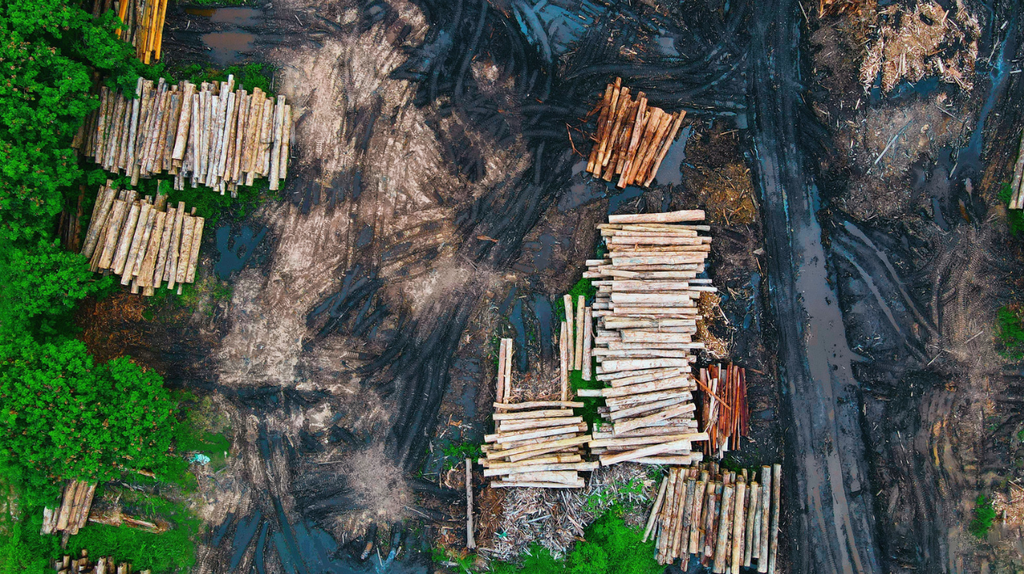
A supplier whose practices contribute to environmental degradation can become a reputational problem for every business that buys from them. A commodity supply chain exposed to deforestation risk is also exposed to certification requirements, regulatory intervention, and consumer backlash. And a business that has never measured its environmental footprint cannot respond credibly when a customer, investor, or regulator asks it to.
The distinction between environmental performance and business performance is becoming increasingly blurred. Investors are scrutinising climate-related risks, regulators are introducing sustainability reporting requirements, customers are demanding greater transparency, and businesses are being asked to demonstrate a clearer understanding of their environmental footprint. What was once considered an externality is increasingly becoming a financial consideration.
Regulatory frameworks are pricing carbon and mandating disclosure of emissions across supply chains. Singapore’s phased sustainability disclosure requirements, already in effect for the largest listed companies and expanding in scope through the end of the decade, are creating formal obligations to measure, verify, and disclose environmental performance. The point here is simple: environmental risks are economic risks.
Where Green Accounting Comes In
Green accounting is the practice of making environmental impacts as visible and as legible as financial ones. While an emissions spreadsheet alone will not reveal whether a supplier is linked to deforestation, the value of the green ledger is that it provides a starting point for bringing different pieces of information together.
Environmental impacts often remain invisible until their consequences become impossible to ignore. Most businesses can easily track revenue, expenses, inventory, and cash flow, but far fewer can clearly see the environmental footprint embedded within their operations and supply chains.
By making environmental impacts more visible, businesses can better understand where risks lie, how they may be affected by events beyond their immediate operations, and what actions they can take to strengthen resilience.
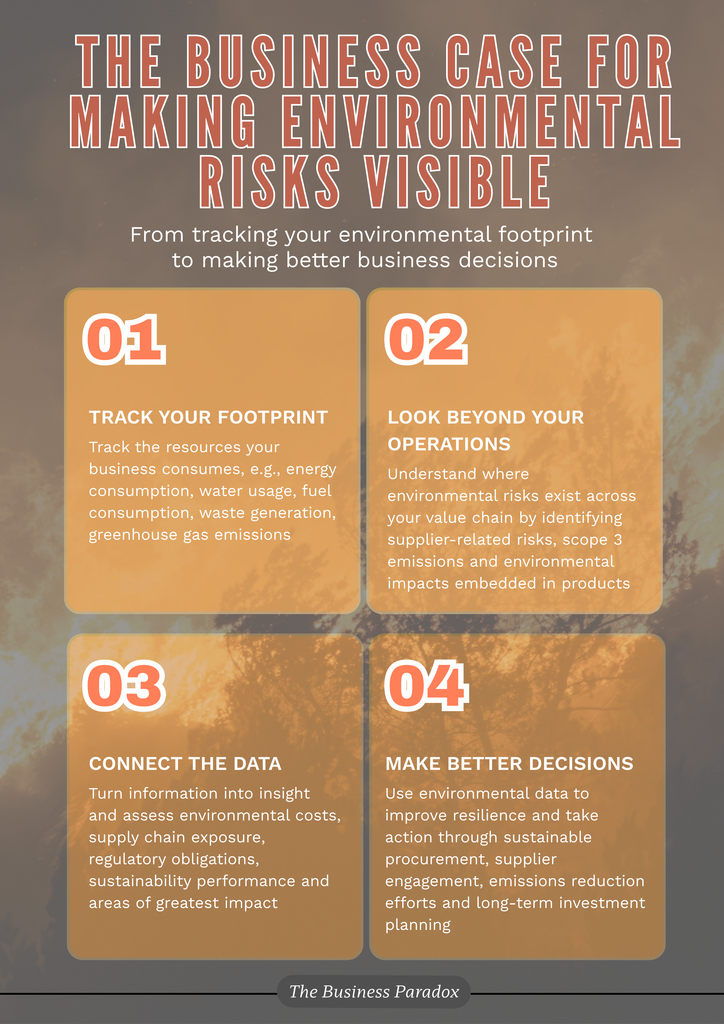
A green ledger provides a structured way to track emissions, resource consumption, waste generation, and supplier-related environmental impacts, turning scattered sustainability information into actionable business intelligence. More importantly, it helps businesses connect environmental events that may seem distant or unrelated to the risks that could eventually affect their operations, costs, customers, and reputation.
The haze demonstrates why this matters. Most businesses affected by poor air quality in Singapore have no direct role in the activities that caused it. They are experiencing the downstream consequences of upstream decisions made in supply chains they are commercially connected to but cannot currently see. A green ledger does not prevent the haze, but it begins to make visible the connections that allow environmental risks to travel from a burning peatland in Kalimantan to the operations, costs, and compliance obligations of a Singapore business.
Making those connections visible is not a guarantee against disruption, it is the precondition for managing it.
Conclusion: The Lessons Hidden in the Smoke
The air we breathe, the products we consume and the supply chains that power our economies are more connected than they may appear. Environmental decisions made in one part of the world can create consequences that ripple across borders, industries and communities, often far removed from where decisions were made.
For businesses, the lesson is not simply that sustainability matters. It is that no business operates in isolation from the environment it depends on. The haze will clear and the supply chains that connect Singapore’s economy to the landscapes where those fires burn will continue to operate, visibly or invisibly, depending on whether the businesses that participate in them have chosen to look.
Green accounting is the practice of choosing to look. In a world where environmental risks travel across supply chains and borders, that choice is becoming less optional every year. The haze is a timely reminder that environmental risks do not respect national borders and our understanding of environmental risks should not stop at the boundaries of our businesses either.
Stay ahead with exclusive insights! Sign up for our mailing list and never miss an article. Be the first to discover inspiring stories, valuable insights and expert tips – straight to your inbox!