From Berkeley to the Lion City: A Data Science Student’s Summer of Discovery
How one American intern found her footing, and herself, in Singapore’s blend of spreadsheets, street food, and dance studios
The first thing Victoria Jia noticed about Singapore wasn’t the gleaming skyline or the famously spotless streets. It was the heat.
“The airport was really fancy, but as soon as I stepped out, wow,” she recalls, laughing. “It’s a heavy kind of hot. It weighs down on you.” Sitting in a Grab on the way to her accommodation, jetlagged and perspiring, the reality of her situation finally landed: she was alone, in a foreign country, about to begin a six-week internship in a field she barely knew. “I was like, wow, I’m traveling alone and I’m here for an internship, and it’s about to be a very eventful month and a half.”
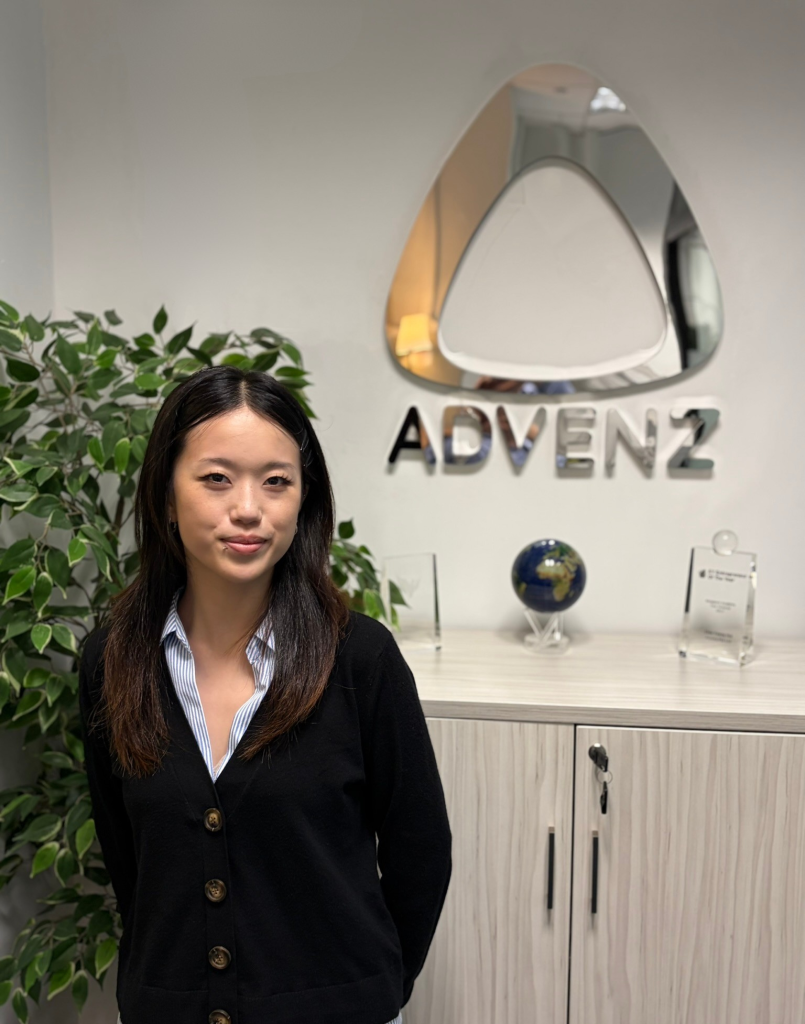
Victoria is a rising junior at the University of California, Berkeley, where she studies applied mathematics with a minor in data science. She is, by her own admission, “a very analytical person,” the kind of student who chose data science partly because it was a promising new program at Berkeley, and partly because she recognized early on that data was becoming one of the world’s most valuable resources. “I decided to just invest in it and see how much I liked it,” she says. She took her first data science course as a freshman, enjoyed the work of pulling findings out of messy datasets, and never looked back.
So how did a data science student from California end up spending her summer at an accounting firm in Southeast Asia? The answer, like Victoria herself, is a mix of careful calculation and willingness to leap.
Why Singapore?
When Victoria began looking at international internship programs, Singapore stood out for reasons both professional and practical. “In my mind, Singapore has always been this hub for tech and innovation,” she explains. But she was equally drawn to the city-state’s scale. As someone who prizes her independence, she liked that she could explore an entire country without a car, navigating everything on foot and by public transport. “I liked that it was easy to explore and get around on my own.”
She admits she arrived knowing remarkably little. “Honestly, I kind of went in blind. It’s in Southeast Asia. I’ve never been. It’s small. That’s all I knew.” What she did know intrigued her: a young nation with a short history that had somehow become one of the most developed places on Earth. “I was just excited to explore a new country and see how it became so developed in such a short amount of time.”
Her expectations of a hyper-modern, high-tech city were largely confirmed. Her fears, however, were not. Like many first-time visitors, Victoria arrived braced for Singapore’s famously strict laws. “I came in with a lot of fears. Like, I’m going to get caught for something I didn’t even know was illegal,” she says. The reality proved far less dramatic. “Honestly, there’s not many ways you can mess up. You just have to live a pretty normal life. I definitely did not have to be as scared as I was.”
The Numbers Person Meets the Numbers Business
The choice of an accounting firm was more deliberate than it might appear. Victoria had recently changed the emphasis of her applied mathematics degree to actuarial science, reasoning that her data science minor made a data science emphasis redundant. “I’ve always been a bit of a numbers person,” she says. “I wanted to explore where the overlap was, and how I could apply data science to a field like accounting.”
That curiosity didn’t make the first week any less daunting. “Coming in on the first day, I had no idea what to expect. I was quite scared. I was intimidated, definitely.” She was entering an industry she knew mostly through second-hand stereotypes: that it was dry, that it was all about being good with numbers. The opening days were a firehose of accounting fundamentals, and she remembers thinking: “Oh my gosh, is this what the rest of the internship is going to be like?”
It wasn’t. The crash course, she came to realize, was context and groundwork for the real work to come. Once she got hands-on experience and began her own project analyzing the firm’s timesheet data, everything clicked into place. “That was when it started picking up. I was like, okay, this is what I’m more used to doing, and I can use what I know to contribute to the bigger picture.” The shift from anxious observer to active contributor, she says, “felt pretty rewarding in the end. I got to do what I wanted, but I also got to learn about this field in general.”
The challenges were real, and not always the ones she expected. There was the technical learning curve. She describes herself as someone who has to pick at a problem “until I finally have it figured out and I actually understand it,” which made the early weeks slow going. But the bigger adjustment was more mundane: the nine-to-five itself. “Having to work nine to five is definitely something where I’m like, oh, maybe I should reconsider,” she laughs. “But once you get into a routine of doing it all the time, it won’t be as bad.”
As for workplace culture, Victoria found fewer differences between Singapore and the US than she anticipated, at least in the office. “It’s very similar in terms of professionalism and overall structure,” she observes. The differences, when they appeared, were social rather than structural.
Finding the Beat
Nowhere was that social contrast clearer than in Victoria’s most memorable pursuit outside the office: dance.
An avid dancer back home, Victoria made a point of taking classes across Singapore to experience the Southeast Asian dance scene firsthand. What she found impressed her: a city that “holds it down” as a hub where cultures from across the region converge. But the studio etiquette caught her off guard. “Back in the US, it’s all about networking. Everyone’s talking to each other, talking to the instructors. But here, everyone’s a little more reserved. They keep to themselves in their own circles.”
Her American instincts led to some charmingly awkward encounters. She would approach instructors after class to thank them, expecting conversation. “They were like, ‘Yeah, thank you for coming,’ and they didn’t expect me to say more. But I started saying more, and they didn’t know how to go off that,” she recalls, amused. “I was like, oh, they’re not used to the American way of taking class.”
Beyond the studios, Singapore’s cultural texture became one of her deepest fascinations. She knew the country was home to distinct ethnic communities, but what struck her was how those threads wove into something shared. “There’s definitely an identity I’ve come to pick out when I’m exploring Singapore,” she says. “There are foods everyone is accustomed to. There’s almost a unified cultural identity at the same time.” Even the small things demanded adaptation, like traffic flowing on the left. “Everyone’s more inclined to the left. I’m used to it now, and now I realize I’m going back in less than two weeks and have to get used to being on the right again.”
The Tip of the Iceberg
Professionally, the internship reshaped how Vic thinks about her field. Working with real, imperfect data, as opposed to the tidy datasets of a university classroom, was itself an education. She’s modest about the scope of her project, calling it “surface level, tip-of-the-iceberg kind of analysis” compared to what full-time data scientists do. But it opened her eyes to an opportunity she hadn’t expected.
“Accounting is something that’s very dependent on data, and there’s so much you can do with it,” she says. “I’m just surprised that not more has been done in accounting with automation and data.” Rather than discouraging her, the gap reads to her as an invitation: “I’m very open to seeing how else it can be applied and where else we can go with it.”
Lessons for the Next Intern
Asked what she’d tell future students weighing an international internship, Victoria doesn’t hesitate. First: come in with a plan, or at least a framework. “Sometimes I’d walk in and think, I know I have this bigger assignment to finish, but I don’t exactly know what I’m trying to find or create right now. Being able to prepare a framework before jumping into things would have helped.”
Second: make peace with not knowing. “It’s totally okay to feel unfamiliar or a little lost. A lot of it comes with learning along the way.” In a short internship at a busy firm, no one is going to hand you a curriculum. “You have to make work for yourself. Take a very broad prompt and build off of that. A lot of the work comes from what you make out of it.”
And finally, there’s the argument for going abroad at all. An internship at home, she notes, ends each day with a return to the familiar. In Singapore, the second half of every day was its own adventure. “After I work, there’s a second half of the day where I get to explore and do my own thing. It’s almost always something new.”
With less than two weeks left before her flight home, Victoria is already thinking about what she’s bringing back: a sharpened sense of where data science and accounting intersect, a newfound respect for the working routine, a few dance moves, and the knowledge that the fears we carry into a new country are usually heavier than anything we actually find there.
Stay ahead with exclusive insights! Sign up for our mailing list and never miss an article. Be the first to discover inspiring stories, valuable insights and expert tips – straight to your inbox!