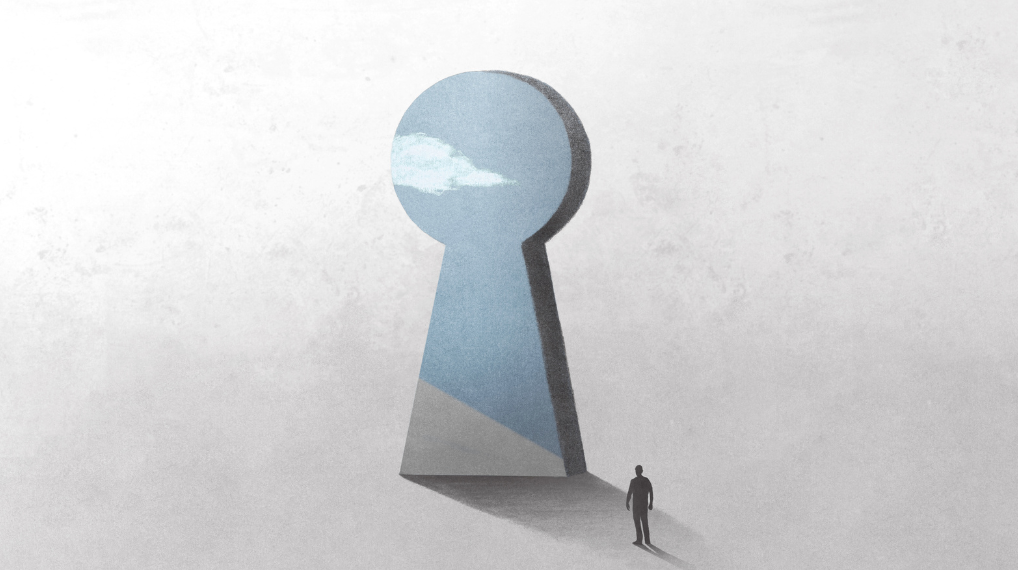
Beyond WFO vs WFH
The debate over Work From Office (WFO) vs Work From Home (WFH) has been oversimplified. Leaders continue to treat the office as a container for people, reducing it a simplistic tug‑of‑war about location.

For the past few years, the conversation about where people work has been organised around false binaries: office or remote, flexibility or structure, autonomy or collaboration. Yet the conversation has consistently overlooked the more important question underneath it. The question is not simply whether work should happen remotely or in person. Rather, it should be: what is the office actually for?
Organisations have steadily shifted from flexible hybrid arrangements toward more structured in-office expectations after the pandemic. The justifications are consistent and familiar: collaboration, culture, connection. While physical proximity enables forms of collaboration and social cohesion that are difficult to fully replicate online, these benefits do not happen automatically. They require spaces built for genuine interaction and for the kind of trust that makes collaboration possible.
The future of work is unlikely to belong entirely to either remote-only or office-only models. The organisations adapting most successfully are moving beyond the binary altogether. The conversation we need to have is not about where people work. Instead, we should be asking these questions: What are people being asked to return to? What is the office space designed to do? What work does it support and what does it actively undermine? Who does it serve and who does it disadvantage?
Is The Office Still Built For How We Work Today?
Many offices today are still built around assumptions about work that no longer reflect how knowledge work actually happens. Modern work is no longer a bounded activity tied to a single desk or a fixed schedule. Some tasks demand deep concentration and solitude while others thrive on spontaneous interaction and creative collision. A single environment cannot optimally support every person or every type of work equally well.
However, most offices were designed for the budget that paid for them. The adoption of open plan layouts was not driven by how knowledge workers actually think or produce their best output. It was driven by space efficiency. Fewer walls. More desks. Lower cost per head. The logic was mainly financial.

These models were built on outdated assumptions, that proximity alone drives communication, or that chance encounters in hallways can substitute for intentional collaboration. Yet research shows that many of these environments often undermine the outcomes they promise, reducing privacy, concentration, and productivity. Knowledge work today depends on environments that support multiple modes of thinking simultaneously.
Leaders have debated whether people should come back to the office, but few have spent time asking what people are coming back to. The question isn’t “Should we return to the office?” but “What kinds of work actually belong there?”
It is an integration of environments, with the physical office serving as a destination for community and collaboration, while remote work supports focus and flexibility. The point is whether the office is built for the work that deserves it.
When Being Seen Replaces Being Productive
Equating visibility with productivity remains one of the most persistent assumptions in workplace design. If employees are physically present and visibly active, work must be happening. Rooted in a traditional “command-and-control” philosophy, many organisations came to treat physical presence as a reliable signal of contribution.
From this perspective, visibility enables management. When employees are in sight, managers can monitor activity and maintain performance. Open-plan offices, hot-desking, and “face time” expectations often grew out of this belief, reinforced by the idea that proximity naturally improves collaboration and speeds up communication.
In practice, shared visibility changes behaviour in more subtle ways. In open environments where leaders and teams occupy the same floor, presence becomes a form of continuous performance. People become aware of being seen working, and that awareness shapes how they behave.
Employees start optimising for presence rather than impact. People stay in office late, join meetings they do not need to be in, and signal commitment through activity rather than outcomes. The open plan office, designed to signal openness and trust, produces a monitored environment where everyone is visible and almost no one feels safe enough to work at their best.
This becomes even more problematic in today’s workforce, where people work differently, think differently, and respond differently to stimulation. A space built around constant visibility assumes that all valuable work is observable. Most of the time, it is not.
What Is The Office Actually For?
A useful starting point is acknowledging that not everything people do at work needs to happen in an office.
Deep-focus tasks such as writing, analysis, and strategic thinking rarely benefit from open office environments. In many cases, they suffer because of them. The same is true for much of the routine coordination work that fills modern calendars. Emails, project updates, documentation, and asynchronous collaboration no longer depend on physical proximity.
So what actually benefits from being together in person?
The answer lies in the kinds of work that are relational, collaborative, and cultural. Face-to-face interaction still plays an important role in building trust and strengthening connection in ways digital tools struggle to fully replicate.
1. Complex Relational Work: This could be building trust with a new colleague, mentoring a junior employee or navigating sensitive conversations
2. Creative Collision: Some of the most valuable ideas inside organisations emerge through unplanned interaction
3. Culture Transmission: Employees learn how decisions are made, what behaviours are rewarded, and how teams function through observation, proximity, and shared experience
Requiring employees to commute for work that can be done more effectively elsewhere does not strengthen culture or collaboration. It simply creates friction. Leaders need to be explicit about why physical presence matters. Employees should come together for collaboration, mentorship, creativity, decision-making, and relationship-building, not simply to be seen occupying a desk.
The mistake many organisations continue to make is treating the office as a universal setting rather than a purposeful one. The office is no longer simply a place people go to work. It is becoming a place people go for certain kinds of work.
From Mandatory Presence to Meaningful Place
The office should not feel like an obligation. Yet for many employees today, it still does. Ask what they dread about going in, and the answers are remarkably consistent: the commute, the noise, and the sense that they are present to be seen rather than to do work that requires being there.
Organisations that have made the office feel worth the effort have made a quiet shift: they stopped designing for headcount and started designing for purpose. That often begins with recognising that different work requires different conditions.
High-performing offices offer variety: quiet spaces for focused work alongside social environments for collaboration and exchange. They allow people to move between settings depending on the task, rather than forcing every type of work into the same open layout.
Just as importantly, it requires creating environments that feel owned. Small degrees of personalisation, comfort, and identity matter. People engage more deeply with spaces that feel like they belong to them. Belonging is not a soft detail here, it directly shapes whether people experience the office as supportive or transactional.
Underlying all of this is a shift in leadership mindset. What do we want people to be able to do together in person that they cannot do as well anywhere else? That changes the role of the office, moving it away from being a default location for work and toward being an intentional environment for specific kinds of work: collaboration, mentorship, trust-building, and shared decision-making.
The Environment Is Not Neutral
The physical environment is never a neutral backdrop to work. It actively shapes how people think, decide, and collaborate. The office is one of the inputs that determines the quality of that work. It signals what an organisation values, how much trust it extends to its people, and whether leadership has considered the conditions under which people do their best work.
Every design choice carries consequence. Noise levels affect concentration and stress. Lighting affects mood and alertness. Layout determines who interacts with whom, how often, and under what conditions. These are not background features. They are active inputs into how work actually gets done, as consequential as any process or system the organisation invests in.
Well-designed environments accelerate collaboration, reduce friction, and improve the flow of ideas. Poorly designed ones does the opposite, introducing noise, interruption, and cognitive overload that steadily erodes focus.
This is why the office is best understood as a mechanism that shapes work. It can enable or inhibit collaboration, protect or disrupt concentration, and strengthen or weaken the culture it is meant to support. Its impact is both direct, through day-to-day work processes, and indirect, through morale, culture, and organisational identity.
Why We Come for the People, Not the Desk
At the end of the day, the case for the office is simple, we go for the people. We do not return to the office because the work requires it. We return because other people do. We return for the mentor who notices something we would have missed on a screen, for the colleague whose offhand comment reframes a problem, and for the sense of being part of something larger than an individual task list.
Shared space also creates shared context. When people work in the same environment, they absorb signals that never make it into meetings or reports. They see what others are focused on, creating the conditions for people to understand where they fit, what the organisation is trying to achieve, and how their work connects to others. When office space encourages these interactions, coordination deepens into connection.
This is precisely why people go to the office: to connect, to collaborate, and to belong. What matters is not the space itself, but the human connections it enables. Mentorship becomes easier, collaboration becomes faster, and shared identity becomes tangible. Work shifts from isolated execution to collective effort. That is why the future office must function as a stage for community and collaboration. It is a place where people come together to produce something greater than what they could achieve alone.

The office is not where work simply happens, it is where work becomes shared. And that is why we return to the office, for the people who give the work meaning.
Conclusion: Balancing “Me” Space and “We” Space
The office question was never really about location. It was about purpose. The more useful question is: how does the office elevate the way we work together?
The organisations that get this right build for two things at once. “Me” space protects the individual offering privacy and freedom from distraction, which is needed for sustained concentration and focus. “We” space empowers the collective, creating the conditions for connection, where ideas flow through chance encounters and unplanned exchanges. That balance of “Me” space and “We” space, is what separates an office worth commuting to from one people merely tolerate.
The office endures because physical space still does something digital tools cannot. It makes work visible. It makes identity shared. It turns individual effort into something collective. The best offices do not just house people, they change what those people are capable of together.
People will not return because policy requires it. They will return because the environment makes the work better.
Stay ahead with exclusive insights! Sign up for our mailing list and never miss an article. Be the first to discover inspiring stories, valuable insights and expert tips – straight to your inbox!