Harnessing the Power of AI for Business Success
Leadership Roundtable – How to start implementing AI?
AI Leadership Roundtable: Harnessing the Power of AI for Business Success The recent AI Leadership […]

AI Leadership Roundtable: Harnessing the Power of AI for Business Success
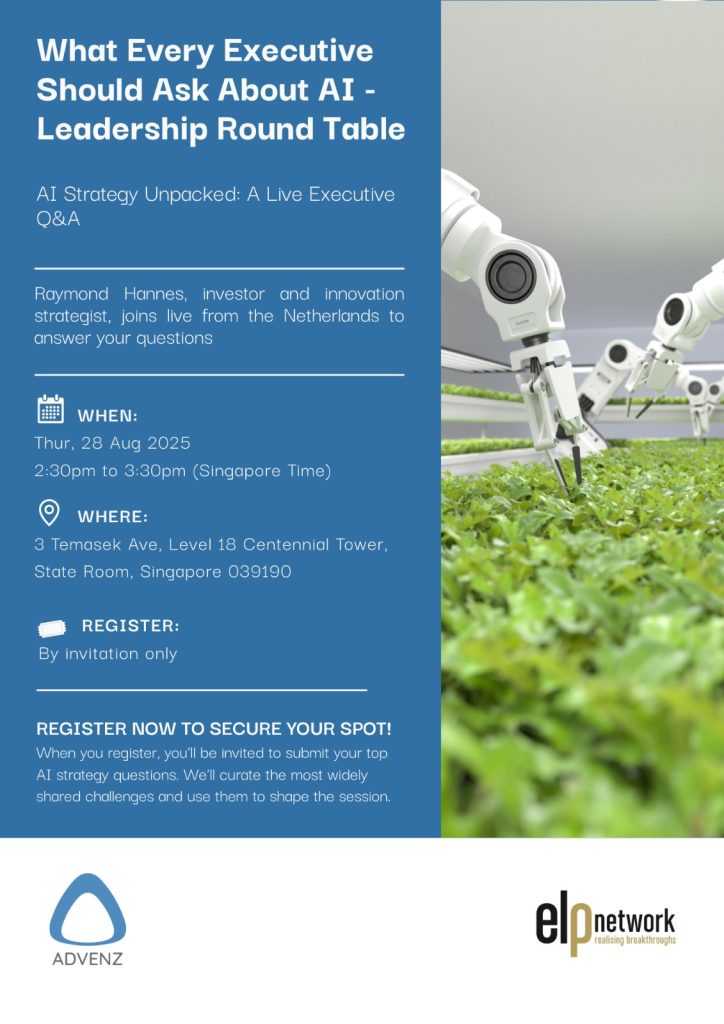
The recent AI Leadership roundtable session brought together industry leaders, experts, and innovators to discuss the transformative potential of artificial intelligence (AI) in the business world. The conversation was rich with insights, practical examples, and strategic reflections on how AI can create, capture, and protect value for companies. Here’s a comprehensive summary of the key takeaways from the session.
Creating Value with AI
The session kicked off with a discussion on the fundamental ways AI can drive business growth. The focus was on three critical areas: creating value for customers, capturing that value profitably, and protecting it through robust governance and ethical considerations. One of the standout examples was language learning tool use of generative AI to create interactive language-learning experiences. By simulating conversations with various personas, such tool has enhanced the learning process beyond what traditional AI chatbots offer.
A key principle emphasized was the importance of starting with the business outcome rather than the AI model itself. Many AI models, such as ChatGPT, Claude, and DeepSeek, converge in quality, so the emphasis should be on what AI enables rather than which model is used.
Four Key Areas of AI Value Creation
- Customisation: AI enables rapid personalization of offerings, making customers feel uniquely served. This is particularly valuable in industries where standardization is common, as it allows for tailored experiences without sacrificing efficiency.
- Creativity: While AI does not create original ideas, it significantly augments human creativity by providing new perspectives and information. This helps overcome biases and entrenched ways of thinking, leading to innovative solutions.
- Connectivity: AI facilitates more natural and dynamic communication between humans and machines. This shift from directive commands to conversational interactions improves interoperability and operational efficiency.
- Cost of Cognition: AI simplifies the understanding of complex data sets, such as detecting outliers or potential fraud in large financial spreadsheets. This dramatically reduces human effort and time, allowing for more strategic decision-making.